
WHERE THE STORY BEGINS
For centuries the sound of water has accompanied life in this valley.

The history of the Mangano Mill is rooted in the Larderia Valley, a region that for centuries has relied on water as a fundamental resource for daily life and the development of agricultural activities. Here, human labor and the power of nature have given rise to a production system that has contributed to the economic growth of the entire community.
Amidst crops, rural paths, and ancient waterways, the mill represented the intersection of technology, tradition, and necessity, transforming water energy into the driving force of a small local economy. For a long time, the Larderia Valley was home to numerous watermills, powered by canals and collection systems that exploited the natural characteristics of the land. Grain from the surrounding villages reached these buildings to be processed through a complex system of wheels, gears, and millstones.
Among these structures, the Mangano Mill is one of the few examples that has survived to the present day, still preserving significant traces of its history and operation.
A HERITAGE RETURNED TO THE COMMUNITY
Thanks to restoration and enhancement efforts, the Mangano Mill is once again a space open to visitors, dedicated to memory, culture, and knowledge of the area.





THE HEART OF THE MILL
Wheels, gears, and millstones: the ingenuity that transformed the force of nature into energy.
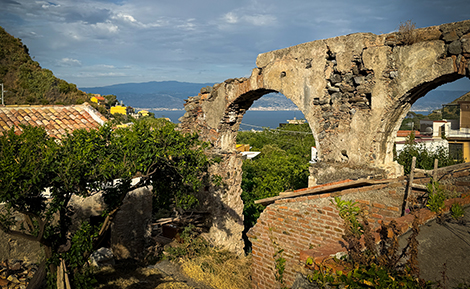
The Mangano Mill is located in a valley that for centuries relied on agriculture and grain processing as its main source of income. The constant presence of water favored the construction of numerous mills and contributed to the economic development of the local community.
Today, this place represents a precious testimony to the rural history of the Messina area and the connection between man, nature, and work.
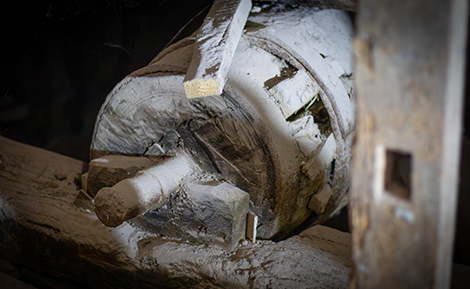
The large external wheel, powered by water conveyed through the canal, transmitted motion to the millstones through a complex system of gears. This simple yet remarkably effective mechanism allowed the millstones to be milled for the valley’s communities for decades.
Digital reconstructions now allow us to understand the original functioning of the mill and its rooms.
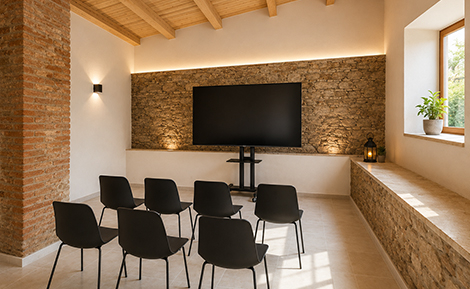
The restoration of the Mangano Mill has given the community a space dedicated to culture, memory, and discovery of the local area. Guided tours allow visitors to explore the historic spaces, while the spaces can host meetings, educational activities, presentations, and small cultural events.
An experience that combines history, landscape, and contemporary storytelling.